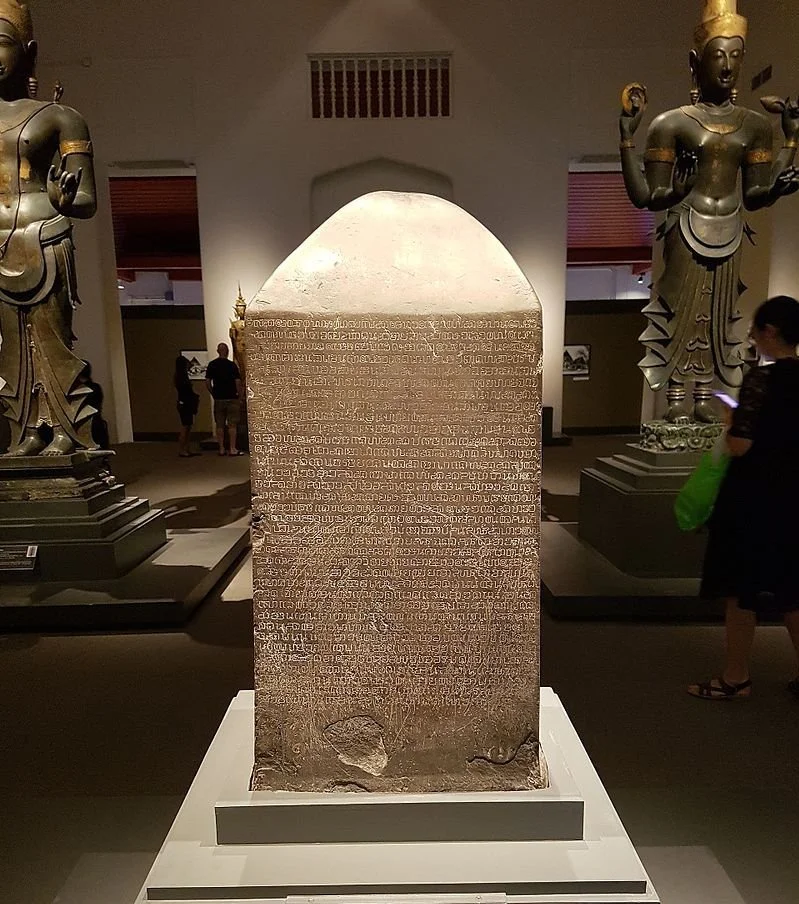
Scope and Content: Describes governance, religion, economy, social life, and linguistic innovation of Sukhothai Kingdom
Biographical: Attributed to King Ram Khamhaeng (reigned 1279–1298)
Provenance: Rediscovered by Prince Mongkut in Sukhothai in 1833
Accession Number: Not formally numbered; listed as Sukhothai Inscription No. 1 / UNESCO MOW 00066
Processing Information: Conserved at Bangkok National Museum since 1968
Access Restrictions: Physical access limited; displayed in museum’s permanent exhibition
Related Materials: Sukhothai Inscriptions, epigraphic studies by Griswold & Prasert, and others
Geographic Coverage: Sukhothai Kingdom (13th century)
Temporal Coverage: 13th century (1292 CE)
Preservation Status: Well-conserved in national museum holdings
Preservation History: Held in royal holdings, then national museum since 1968
Retention Policy: Permanent national heritage preservation
Archival Location: Bangkok National Museum
Backup Status: Digitally documented in museum and UNESCO archives
Parent Collection: Epigraphic collection of Sukhothai inscriptions
Sub Collections: UNESCO Memory of the World heritage items
Related Items: Other Thai stone inscriptions from Sukhothai era, and the throne slab discovered concurrently
Accessibility Features: Digital reproductions and descriptions accessible via UNESCO and academic publications
Accessibility Compliance: Online legacy access through UNESCO MOW and Wikipedia
Copyright Status: Public domain (13th-century artifact); modern rights held by Fine Arts Department
Copyright Holder: Fine Arts Department / Bangkok National Museum
License Terms: Educational reproduction allowed with attribution
Jurisdiction: Thailand
Cultural Significance: Considered foundational document for Thai script and national identity; regarded as the earliest literary evidence of Thai society
Cultural Context: Early state formation of Sukhothai Kingdom, Theravāda Buddhism, and linguistic developments
Access Statistics: Prominent in national narrative, widely cited in scholarship and education
Citation Information: Ram Khamhaeng Inscription, Sukhothai Inscription No. 1; Bangkok National Museum. UNESCO Memory of the World Register (2003).
User Feedback: Regarded as a cornerstone of Thai national history and script development; subject of both reverence and scholarly debate regarding authenticity
Educational Use: Core text in Thai historiography, epigraphy, art history, and language studies
Curriculum Alignment: Higher education in history, archaeology, literature
Learning Objectives: Explore early Thai governance, language origin, state identity formation